Get the app


Get the 5 Star Truck Sales app
Scan with your phone’s camera to get the app.
Get the 5 Star Truck Sales app
Scan with your phone’s camera to get the app.

5 Star Truck Sales app · Free on Google Play
GetThe Freightliner Cascadia is the most common truck on American highways, and it’s the truck we sell more of than anything else. Since the fall of 2024, more than 140 Cascadias have come through our lot in Byron Center, Michigan: 126s and 125s mostly, plus 113 and 116 day cabs. That’s enough trucks to know what buyers ask, what they should ask, and what these trucks sell for.
This guide covers the Cascadia generations and what the model numbers mean, the DD13 and DD15 engines and the transmissions behind them, day cabs and sleeper sizes, what used Cascadias have sold for here, and what to check before you buy one. The trucks we have in stock right now are listed partway down.
The Cascadia has been through three major versions since it replaced the Century and Columbia in 2007. The model number has always been the cab length in inches, measured from bumper to back of cab, so a 126 is one inch longer than a 125 and a 116 is three inches longer than a 113.
| Generation | Model years | Models | What changed |
|---|---|---|---|
| Original Cascadia | 2008–2012 | 125, 113 | Replaced the Century and Columbia. Detroit DD13 and DD15 engines, with Cummins ISX available in the early years. Mostly manual Eaton Fuller transmissions. |
| Cascadia Evolution | 2013–2017 | 125, 113 | Aerodynamic redesign for fuel economy, updated DD15, and the Detroit DT12 automated transmission arrived. Detroit Assurance safety systems from 2015. |
| New Cascadia | 2018–2019 | 126, 116 | Full redesign: new cab, dash and sleeper interiors, DT12 as the common transmission, Detroit Assurance 4.0 with collision mitigation standard on most trucks. |
| New Cascadia, 2020 refresh | 2020–present | 126, 116 | Reshaped hood and mirrors for aerodynamics, Detroit Assurance 5.0 with lane keeping and adaptive cruise down to a stop, updated DD13 and DD15. |
In plain terms: a 125 is a 2019-or-older truck, and a 126 is a 2018-or-newer truck. A 2019 Cascadia 125 and a 2019 Cascadia 126 are different trucks, since Freightliner built both designs for a few years during the changeover.
The choice comes down to two things: how much truck you need, and how new you want it.
| Model | Years | Typical setup | Who buys it |
|---|---|---|---|
| Cascadia 126 | 2018–present | Sleeper, DD15 or DD13, DT12 automated | Owner-operators and small fleets running long haul. The newest design, the best fuel economy and the most safety equipment. |
| Cascadia 125 | 2008–2019 | Sleeper or day cab, DD15 or DD13, manual or DT12 | Buyers who want a proven long-haul truck at a lower price. A 2016–2019 Evolution 125 is the sweet spot for value. |
| Cascadia 116 | 2018–present | Day cab, DD13 | Regional and local work in the new design: shorter hood for tight yards, lighter for more payload. |
| Cascadia 113 | 2008–2019 | Day cab, DD13 | The budget regional tractor. Most come from fleets, and prices start low. |
If you run coast to coast, the 126 with a DD15 is the standard choice, and it’s what most of our Cascadia buyers take home. If you’re home every night, a 116 or 113 day cab saves weight and money. If you want a sleeper on a tighter budget, a late Cascadia 125 gets you most of the truck for a fraction of the price.
Nearly every used Cascadia you’ll see has a Detroit engine, because Freightliner and Detroit are both Daimler companies and the pairing is what fleets order.
Detroit DD15. A 14.8-liter engine, typically rated 400 to 505 horsepower with up to 1,850 lb-ft of torque. It’s the long-haul engine: built for heavy loads, mountains and high mileage. Most Cascadia 126 sleepers have one.
Detroit DD13. A 12.8-liter engine, typically 350 to 525 horsepower. It weighs several hundred pounds less than the DD15, which means more payload, and it’s well matched to regional and day cab work. Most 113 and 116 day cabs have one, and plenty of 125 and 126 sleepers do too.
Cummins ISX. Found in some original-generation Cascadias from 2008 to about 2012. Rarer, and parts and service go through Cummins rather than Detroit.
Detroit DT12. A 12-speed automated manual transmission. It shifts itself, so any driver can run it, and it’s tuned to the Detroit engines for fuel economy. It became common on the Evolution and is the standard transmission on the New Cascadia.
Eaton Fuller manuals. 10-, 13- and 18-speed manuals were the norm on original Cascadias and still show up on Evolutions. Some drivers won’t have anything else. Note that a manual limits who in your operation can drive the truck.
For a buyer deciding between two trucks, the rule of thumb: DD15 for heavy or mountainous long haul, DD13 for regional work or when payload matters, and the DT12 unless you specifically want a manual.
A day cab has no bunk and is the choice for drivers who are home every night: local delivery, regional runs, drayage and dedicated routes. It’s lighter and cheaper to buy, and it fits where a sleeper won’t.
Sleepers come in several sizes, and the size says a lot about how the truck was used:
On a New Cascadia, the 72-inch raised roof also came with Freightliner’s Driver Loft option, a dinette that converts into a murphy-style bed. It’s a nice feature in a truck you’ll live in, so it’s worth asking about.
These are our own numbers: the typical price range for Cascadias sold at 5 Star Truck Sales since October 2024, by model. “Typical” means the middle half of our sales, so a single unusual truck doesn’t skew it. Year, mileage, engine, sleeper size and condition move an individual truck above or below these ranges.
| Model | Typical years | Typical price |
|---|---|---|
| Cascadia 126 sleeper | 2019–2022 | $35,000–$65,000 |
| Cascadia 116 day cab | 2020–2021 | $38,000–$44,000 |
| Cascadia 125 sleeper | 2016–2019 | $11,500–$34,000 |
| Cascadia 125 day cab | 2017–2018 | $17,000–$21,500 |
| Cascadia 113 day cab | 2017–2019 | $13,500–$21,500 |
Two patterns in these numbers. First, the jump from a 125 to a 126 is real money, because it’s a newer design and newer trucks. Second, a 2019 Cascadia 125 and a 2019 Cascadia 126 can be $20,000 apart at the same age and similar mileage, so if you’re set on a 2018 or 2019 truck, be clear about which one you’re looking at.
Every truck on our website shows its price, and the spec sheet on each listing has the full specs. Financing is available on all of them.
Most used Cascadias come off fleet leases at three to five years old with 400,000 to 600,000 miles. That’s normal, and a Detroit engine with a good history has a lot of life left. What matters is how the truck was run and what shape its systems are in now. Ten things to check, in the order we’d check them:
Every truck we sell has already been through a third-party DOT inspection and third-party service, with fresh oil and filters and the coolant filter checked, before it’s listed. You’re welcome to have your own mechanic look at any truck on our lot as well.
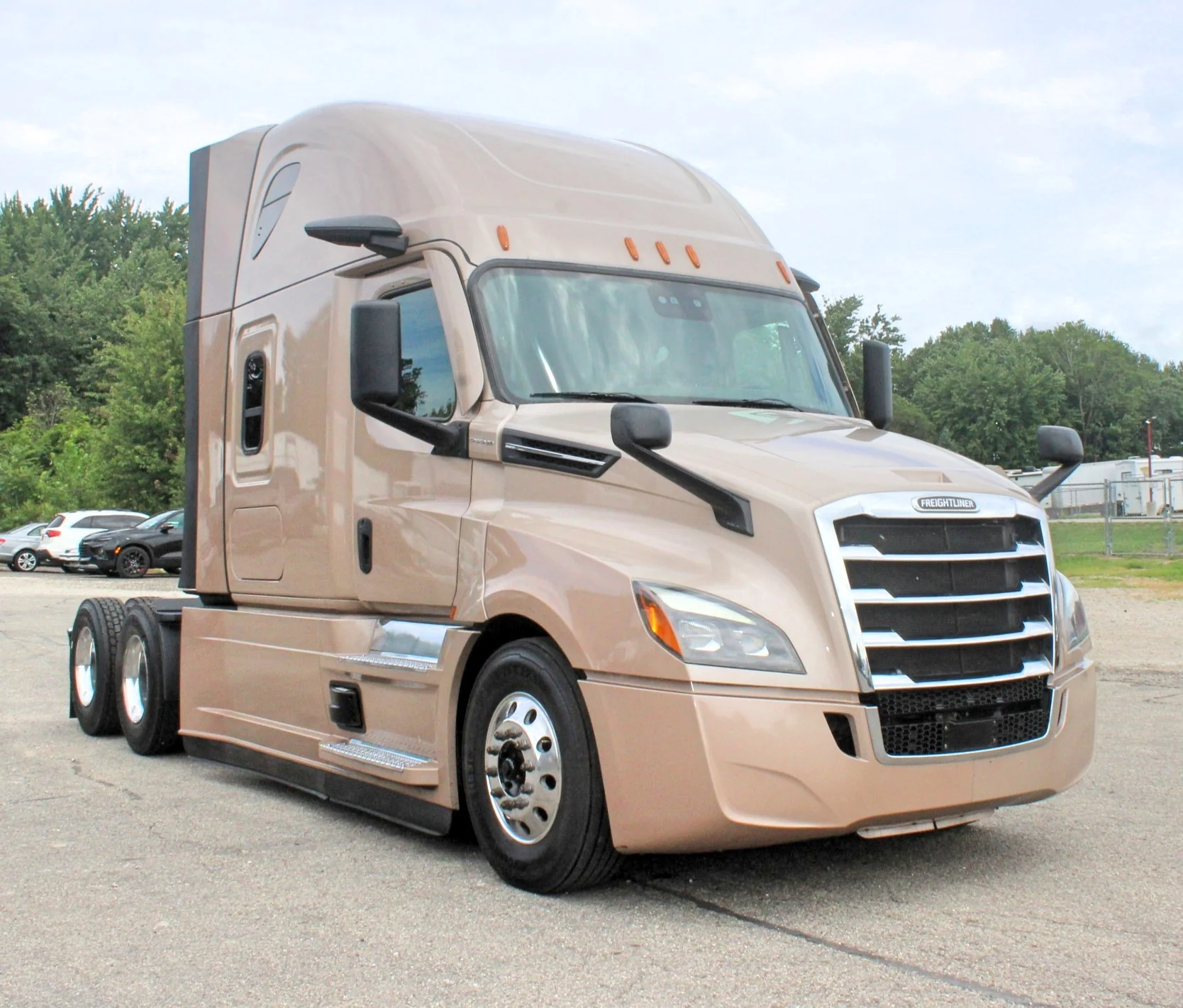
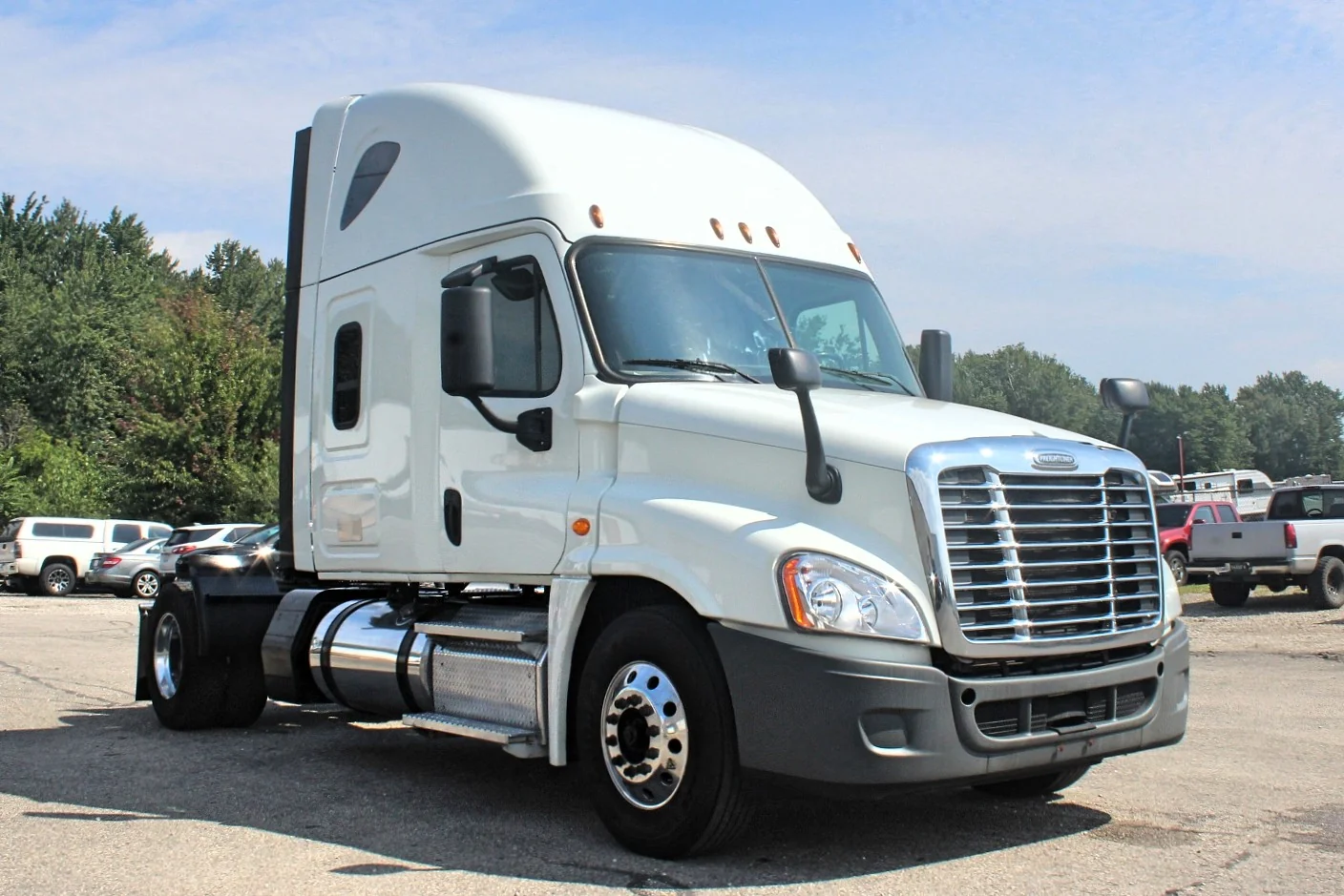
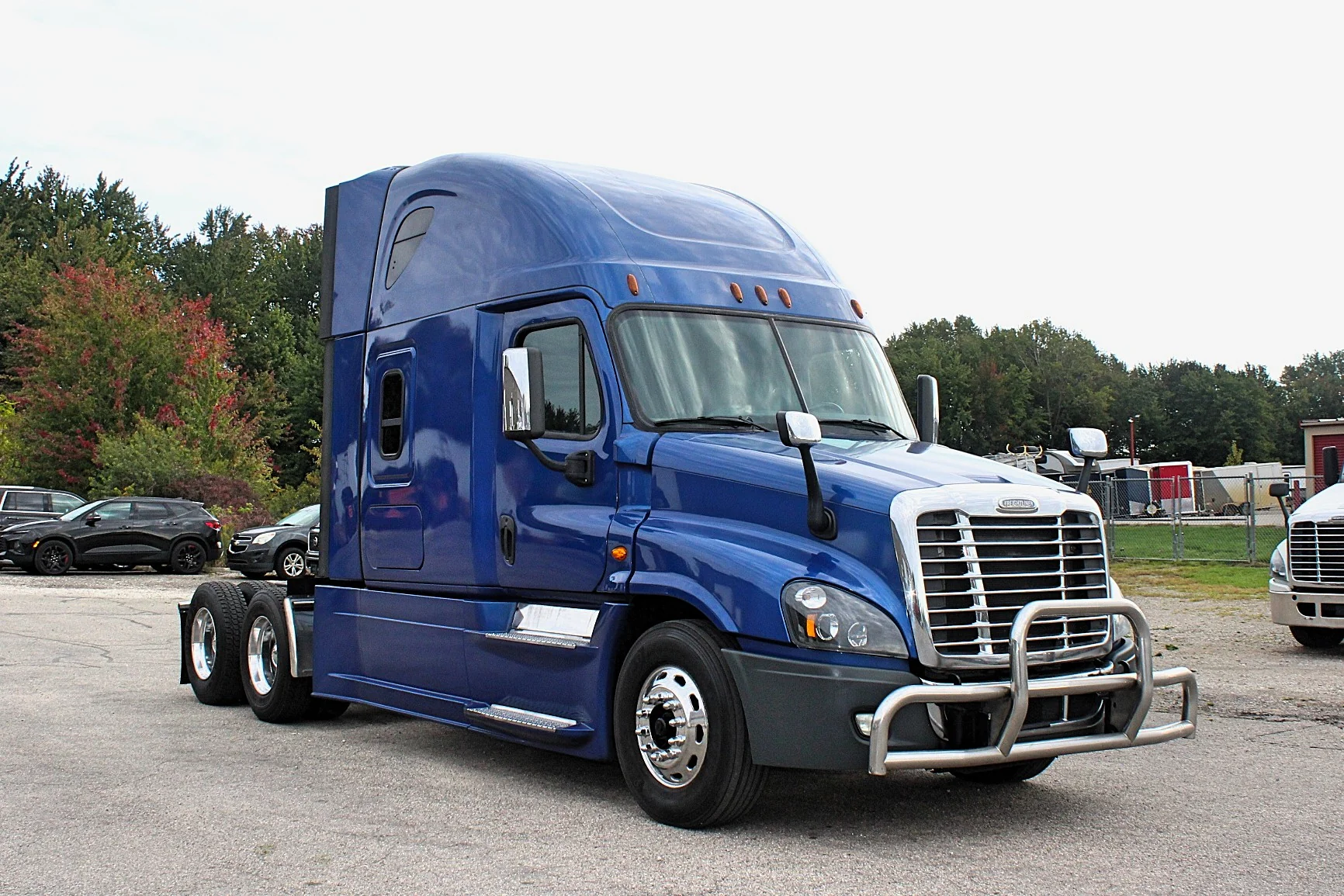
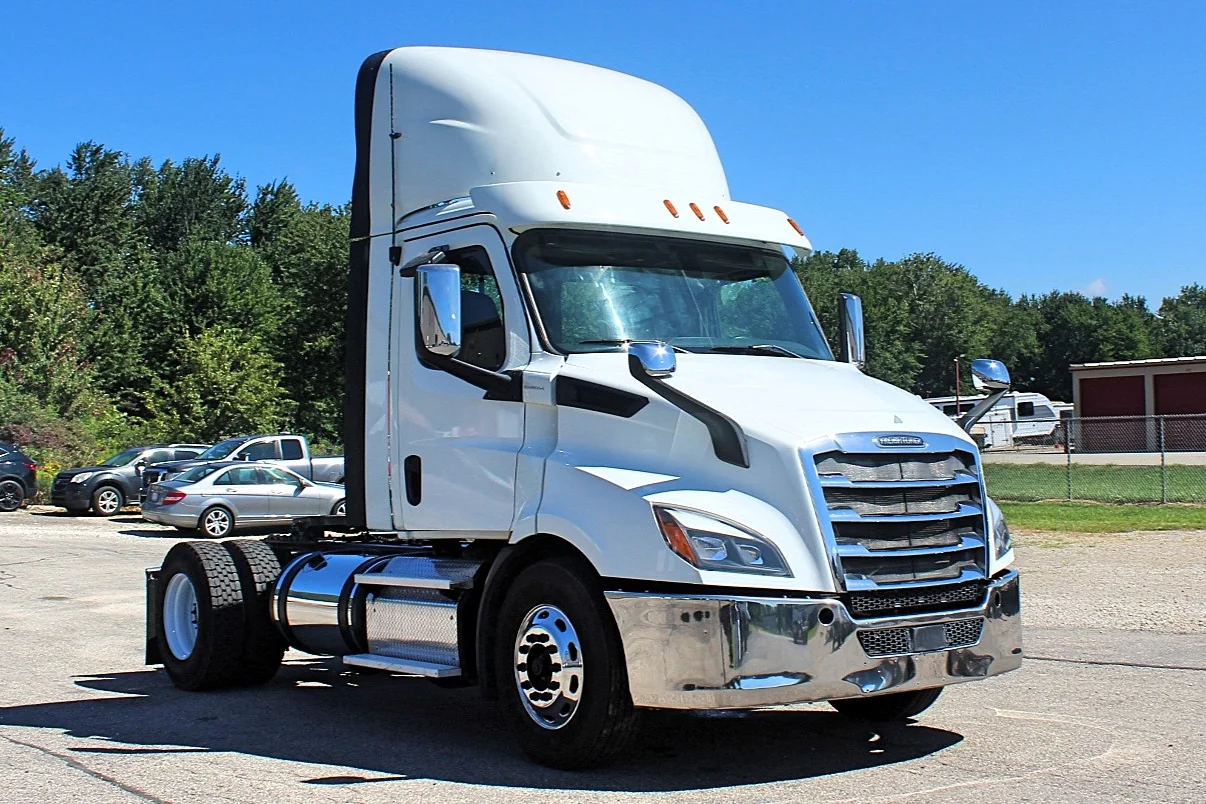
Every Cascadia we list gets the same preparation before it goes on the lot: a third-party DOT inspection, third-party service with fresh oil and filters, a professional cleaning, and a new mattress in every sleeper. Each listing has photos, a walkaround video on most trucks, and a downloadable spec sheet. We offer financing, and we deliver anywhere in the country.
Browse all of our Freightliner trucks, or see the Cascadia 126 and Cascadia 125 pages. Questions about a specific truck? Call or text 616-600-2682.
The 126 is the New Cascadia, a full redesign introduced for the 2018 model year with a new cab, better aerodynamics and more safety equipment. The 125 is the earlier design, built through 2019. The number is the cab length in inches, but the real difference is the generation.
It depends more on care than the number. Fleet Cascadias typically come off lease between 400,000 and 600,000 miles, and a Detroit DD15 or DD13 with a clean history will go well past that. Look at idle hours, fault codes and aftertreatment condition before the odometer.
Neither; they're for different work. The DD15 has more power and torque for heavy loads and long haul. The DD13 is lighter, which means more payload, and it's well suited to regional and day cab work.
Yes. Financing is available on every truck we sell. Apply online in a few minutes, and we'll work with you to find financing that fits.
Yes. We deliver anywhere in the country. Most of our Cascadia buyers are outside Michigan.
Some still carry factory coverage, and extended warranty options are available on many trucks. Ask about the specific truck you're interested in.